Kitchen Remodel Planning Checklist: Cabinets, Countertops, Layout, and Finishes
Planning a kitchen remodel involves more than choosing attractive cabinets and countertops. You also need to consider your layout, storage requirements, materials, measurements, budget, and installation timeline. Making these decisions in the right order can help you avoid unnecessary changes and create a kitchen that suits your home and everyday routine.
Whether you are updating an outdated kitchen or planning a complete transformation, a practical checklist can help you stay organized throughout the process. Kitchen D.S.M. offers kitchen-related design and product solutions that homeowners can explore when planning their next project.
Define Your Kitchen Remodeling Goals
Before selecting products, identify what you want your remodeled kitchen to accomplish. Perhaps your current cabinets lack storage, your countertops provide insufficient workspace, or your existing layout makes cooking inconvenient.
Write down your main priorities and distinguish essential improvements from optional upgrades. This helps you make decisions based on your needs rather than choosing products simply because they look appealing.
Consider how you use your kitchen every day. If you prepare meals frequently, prioritize convenient work areas and accessible storage. If your kitchen is a gathering space, consider how the layout supports movement and interaction.
Having a clear vision will make the remaining planning decisions easier.
Review Your Kitchen Layout and Measurements
Your kitchen layout determines how comfortably you can move between cooking, preparation, storage, and cleanup areas. Before ordering cabinetry or countertops, evaluate the existing arrangement and identify opportunities to improve it.
Consider whether your current layout provides enough countertop space, whether appliances are conveniently positioned, and whether cabinet doors and drawers can open without obstructing walkways.
Accurate measurements are essential. Record wall dimensions, ceiling height, window locations, door openings, and the positions of existing plumbing and electrical connections. Appliance specifications should also be checked before finalizing cabinet configurations.
If you plan to add a kitchen island, confirm that the room can accommodate it while maintaining comfortable circulation.
A carefully measured layout provides a more reliable foundation for selecting kitchen products and planning installation.
Choose Kitchen Cabinetry That Fits Your Needs
Cabinetry affects storage capacity, organization, and the overall appearance of your kitchen. Your selections should reflect both your preferred style and the way you use the space.
Start by exploring cabinet styles and finishes that suit your home. Shaker cabinetry can work with a range of interiors, while modern cabinet fronts may appeal to homeowners who prefer clean lines. Natural wood finishes and painted cabinets offer additional design possibilities.
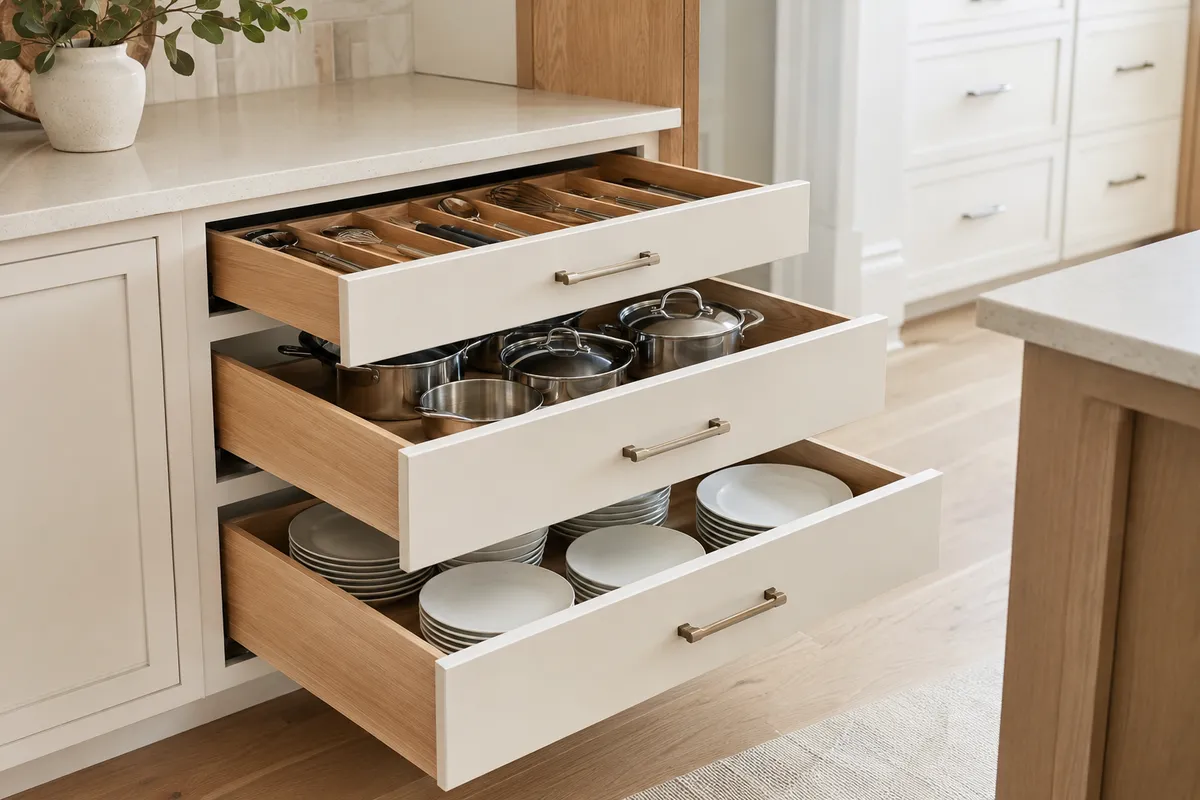
Next, consider the storage configuration. Drawers, shelves, pantry cabinets, and specialized organizers can help keep cookware and ingredients accessible.
Before making a decision, confirm:
Cabinet dimensions and configurations.
Door styles, colors, and finishes.
Hardware and storage accessories.
Compatibility with appliances and countertop measurements.
Cleaning requirements and maintenance preferences.
If your kitchen has unusual dimensions or specific storage challenges, discuss whether custom kitchen cabinetry would be appropriate for your project.
Explore the Kitchen D.S.M. cabinetry page to learn more about available options.
Select Countertops That Complement Your Cabinets
Countertops are an important part of both kitchen design and everyday functionality. They should complement your cabinetry while meeting your practical requirements.
Consider the color, pattern, texture, durability, and maintenance needs of the materials you are evaluating. A subtle countertop can balance visually distinctive cabinetry, while a contrasting surface may create a stronger focal point.
Think about how much workspace you need for meal preparation and small appliances. Confirm the dimensions of the countertop area and discuss sink openings, edges, backsplashes, and other project-specific details before fabrication.
It is also helpful to review cabinet and countertop samples together. This allows you to assess how the colors and textures work as a complete combination.
Choosing these materials with the overall design in mind can help prevent mismatched finishes and avoidable changes later.
Coordinate Colors, Hardware, and Finishes
A cohesive kitchen design depends on how the different elements work together. Cabinet finishes, countertop materials, backsplash colors, and hardware should contribute to a consistent appearance.
You do not need to use identical colors throughout the kitchen. Contrasting finishes can add depth, while complementary tones can create a balanced look.
For example, natural wood cabinetry can introduce warmth, while simple hardware and neutral surfaces can maintain a clean aesthetic. The best combination depends on your personal preferences and the character of your home.
Lighting should also be considered when evaluating finishes because it can change how colors and textures appear.
Collect samples and compare them together before finalizing your selections. This simple step can help you feel more confident about the overall design.
Establish Your Budget and Project Priorities
A kitchen remodel may include cabinetry, countertops, appliances, lighting, flooring, plumbing, electrical work, and installation. The overall investment will depend on the size of the project, selected materials, labor, and the condition of your existing kitchen.
Request detailed estimates and clarify which products and services are included. Ask about delivery, installation, measurements, removal of existing materials, and any additional work that may be required.
It is also sensible to reserve some budget for unexpected repairs or adjustments.
If your budget is limited, prioritize improvements that address the most significant functional problems. You can then evaluate decorative upgrades according to their importance and affordability.
Clear financial planning makes it easier to compare options and avoid committing to products before understanding the complete project requirements.
Confirm Installation Details Before Ordering
Before finalizing orders, review the measurements, specifications, finishes, and quantities of the selected products. Confirm that cabinetry, appliances, countertops, and other components will work together.
Discuss the installation sequence with the professionals handling your project. Some work must be completed before cabinets or countertops can be installed, and changes to plumbing or electrical connections may affect the schedule.
Make sure you understand delivery arrangements, lead times, warranty information, and who is responsible for each stage of the project.
Reviewing these details in advance can reduce confusion and help keep the remodeling process organized.
Plan Your Kitchen Remodel With Kitchen D.S.M.
A successful kitchen remodel brings together practical planning, coordinated products, and design choices that reflect your needs.
Kitchen D.S.M. provides kitchen-related products and design solutions for homeowners exploring their remodeling options. Visit the Kitchen D.S.M. website to explore its offerings, review kitchen cabinetry options, or schedule a consultation to discuss your project.
Prepare your measurements, preferred styles, budget priorities, and questions before your consultation. Having this information ready can make it easier to evaluate suitable options.
Final Thoughts
A well-organized kitchen remodel starts with clear priorities and careful preparation. By reviewing your layout, selecting appropriate cabinetry, coordinating countertops and finishes, and confirming measurements before installation, you can make more informed decisions throughout your project.
Use this checklist as a starting point, adapt it to your kitchen's requirements, and explore Kitchen D.S.M. when you are ready to consider cabinetry and kitchen design options
